


Kate Brehm
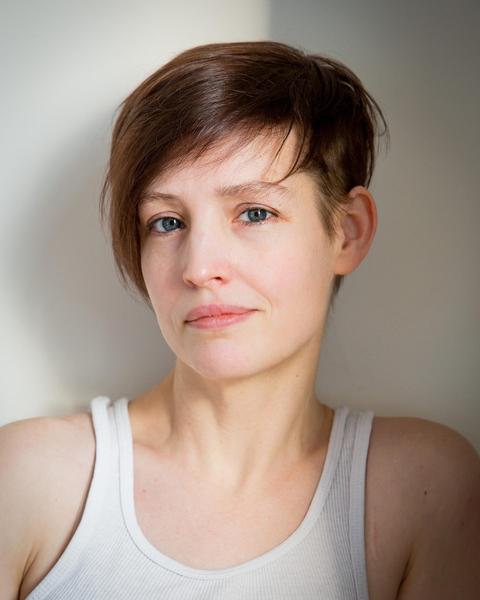
Kate Brehm is a puppeteer, director, and movement-based theater artist who, over the last 25 years, developed her voice in the downtown New York performance scene. She cut her teeth creating and performing at HERE Arts Center and with adventurous companies and venues including Mabou Mines, St. Ann’s Warehouse, Dixon Place, Abrons Arts Center, Richard Foreman’s Ontological Theater, Blue Man Group, CBGBs Gallery, Galapagos Art Space, Chashama, and La MaMa. Through her own company, imnotlost, she has produced original puppet shows and events such as Dark Space, Discrepancies, The Poofs, Dance Hall Slow Dances, Fireside Puppet Chats, Things Fall Apart, andThe Eye Which We Do Not Have work which have been supported by multiple residencies and three Henson Foundation awards.
For over a decade, Kate trained in the Margolis Method with Kari Margolis, whose lineage traces back to Étienne Decroux’s corporeal mime. This deep physical practice underpins her performance with puppets, large mask creatures, and performing scenery, as well as her distinctive movement training for puppeteers. She’s also trained extensively in clown, Lecoq-based approaches to mask, and contemporary movement direction.
Kate has toured internationally as a performer and directing/design associate with MacArthur “Genius” puppeteer Basil Twist, appearing in more than eight of his renowned productions. Her performance credits include such works as Symphonie Fantastique, Dogugaeshi, Rite of Spring, and Arias With a Twist, while her directing/design include Charlie and the Chocolate Factory -Broadway, Book of Mountains and Seas, Hansel and Gretel at Detroit Opera, and Dorothy and the Prince of Oz for Tulsa Ballet and BalletMet. She has performed at Lincoln Center, the LA Philharmonic, the Spoleto Festival, and venues across Europe, Japan, and the U.S.
Since 2019, Kate has been a Lecturer in Theater, Dance & Media at Harvard University, where she teaches courses in performing and animating figurative puppets, utilizing cinematic visual storytelling techniques for live theater with toy theater and shadow puppetry, honing the actor’s physical instrument and movement capacity for storytelling, mask theater, and ensemble devising. Her classes center embodied learning and “performative visual thinking,” training students to use their own bodies paired with performing materials to build dynamic sites of meaning-making onstage.